

-
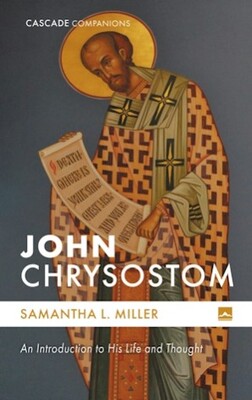
John Chrysostom: An Introduction to His Life and Thought
Samantha L. Miller
The “Golden-Mouthed” preacher, John Chrysostom, was one of the most significant voices of his time. This introduction to Chrysostom’s life and thought invites readers to come to know the fourth-century bishop as a friend in the communion of saints. Covering both his biography as well as major themes in his preaching—pastoral theology, asceticism, virtue (Christian living), wealth and poverty, salvation, and some problematic beliefs—this book asks readers what they might learn from Chrysostom today. Anyone who has heard of the famous preacher and wants to know more, or anyone who is simply looking for a wise guide to lead them closer to Christ, will find wisdom in these pages.
-
John Chrysostom and African Charismatic Theology in Conversation: Salvation, Deliverance, and the Prosperity Gospel
Samantha L. Miller
This book puts John Chrysostom in conversation with deliverance ministries and the prosperity gospel in modern African charismatic Christianity. Samantha Miller argues that Chrysostom had a cosmology not unlike that present in the charismatic Christianity of the global south, where the world is populated by spirits able to affect the material world. Additionally, Chrysostom had plenty to say about suffering, demons, and prosperity. Through this conversation, issues of personal moral responsibility and salvation rise to the surface, and it is through these issues that modern Western and African Christians―theologians, pastors, missionaries, and laity―can perhaps have a conversation that gets past the question of a spirit-inhabited world and talk together about the saving work of Christ for the benefit of all the church.
-
Chrysostom's Devil: Demons, the Will, and Virtue in Patristic Soteriology
Samantha L. Miller
For many Christians today, the notion that demons should play a role in our faith―or that they even exist―may seem dubious. But that was certainly not the case for John Chrysostom, the "golden-tongued" early church preacher and theologian who became the bishop of Constantinople near the end of the fourth century. Indeed, references to demons and the devil permeate his rhetoric. But to what end?
In this New Explorations in Theology volume, Samantha Miller examines Chrysostom's theology and world, both of which were imbued with discussions about demons. For Chrysostom, she contends, such references were employed in order to encourage Christians to be virtuous, to prepare them for the struggle of the Christian life, and ultimately to enable them to exercise their will as they worked out their salvation.
Understanding the role of demons in Chrysostom's soteriology gives us insight into what it means to be human and what it means to follow Christ in a world fraught with temptation and danger. In that regard, Chrysostom's golden words continue to demonstrate relevance to Christians in today's world.
Featuring new monographs with cutting-edge research, New Explorations in Theology provides a platform for constructive, creative work in the areas of systematic, historical, philosophical, biblical, and practical theology.
-
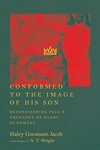
Conformed to the Image of His Son: Reconsidering Paul's Theology of Glory in Romans
Haley Goranson Jacob
With its soaring affirmations and profound statements of salvation in Christ, Romans 8 is a high point in Pauline theology. But what does Paul mean when in 8:29 he speaks of being "conformed to the image of his Son"?Remarkably, there has been little scholarly attention awarded to this Pauline statement of the goal of salvation. And yet in Christian piety, preaching, and theology, this is a treasured phrase. Surprisingly, its meaning has been variously and ambiguously expressed. Is it a moral or spiritual or sanctifying conformity to Christ, or to his suffering, or does it point to an eschatological transformation into radiant glory?In Conformed to the Image of His Son, Haley Goranson Jacob probes and reopens a text perhaps too familiar and a meaning too often assumed. If conformity to the image of the Son is the goal of salvation, a proper understanding is paramount. Jacob points out that the key lies in the meaning of "glory" in Paul's biblical-theological perspective and in how he uses the language of glory in Romans. For this investigation of glory alone, her study would be valuable for the fresh understanding she brings to Paul's narrative of glory. But in introducing a new and compelling reading of Romans 8:29, this is a study that makes a strong bid to reorient our understanding of Paul's classic statement of the goal of salvation.
-
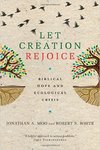
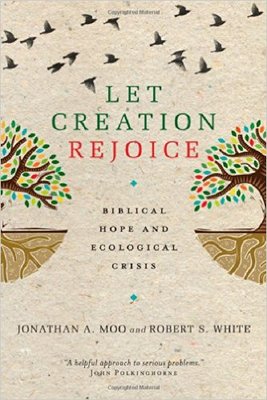
Let Creation Rejoice: Biblical Hope and Ecological Crisis
Jonathan Moo
"Let all creation rejoice before the LORD, for he comes." Psalm 96:13
The Bible is bathed with images of God caring for his creation in all its complexity. Yet in the face of climate change and other environmental trends, philosophers, filmmakers, environmentalists, politicians and senior scientists increasingly resort to apocalyptic rhetoric to warn us that a so-called perfect storm of factors threatens the future of life on earth. Yet if the Christian gospel fundamentally reorients us in our relationship to God and his world, then there ought to be something radically distinctive about our attitude and approach to such threats. In short, there ought to be a place for hope. And there ought to be a place for Christians to participate in that hope. Moo and White therefore reflect on the difference the Bible's vision of the future of all of creation makes.
Why should creation rejoice? Because God loves and cares the world he made.
Printing is not supported at the primary Gallery Thumbnail page. Please first navigate to a specific Image before printing.